

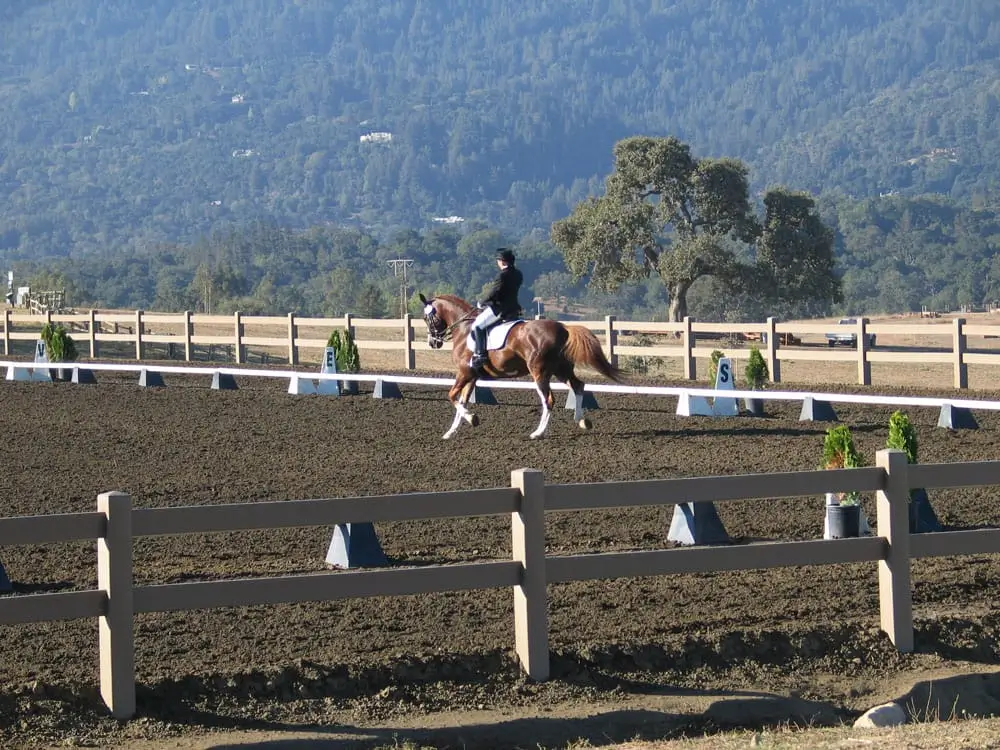
A dressage arena can look perfect on day one—crisp rails, clean corners, straight lines that make every movement feel more polished—and then real life shows up. A horse brushes the rail, a gate gets swung a little too fast, the arena drag bumps a corner, summer heat bakes the fence line, or winter cold tightens everything up. After a few seasons, the fencing that once looked pristine can start to look very different.
That’s why the material you choose for a dressing arena matters.
HDPE and PVC are both popular materials for dressage arena fencing because they look professional and require little upkeep compared to wood. But they don’t age the same, and they don’t handle impact, weather, or long-term wear the same way. Deciding between the two is an important decision.
What Is HDPE Dressage Arena Fencing?
High-density polyethylene (HDPE) is a high-performance plastic designed to hold up in demanding outdoor environments. You’ll see HDPE used in products that need to handle sun exposure, moisture, temperature swings, and regular wear without breaking down quickly.
For dressage arenas, HDPE is typically formed into clean, highly visible rails that create sharp boundaries and a professional look. It’s a popular choice for facilities that want the bright, classic appearance of a white arena fence but not the ongoing upkeep that comes with wood.
Why HDPE Works Well for Dressage Arenas
What sets HDPE apart is how it balances strength with flexibility. In an active riding facility, arena fencing gets bumped—not because anyone is careless but because horses move unpredictably and equipment occasionally makes contact. HDPE tends to absorb that impact and recover rather than cracking or breaking in the moment.
HDPE also performs well in changing weather. Whether you’re dealing with summer heat, winter cold, or the freeze-and-thaw conditions that come with many outdoor arenas, HDPE generally holds its shape and appearance with less wear showing up over time.
For owners who want a fence that stays straight, stays clean-looking, and keeps maintenance simple, HDPE is often a strong fit.
What Is PVC Dressage Arena Fencing?
Polyvinyl chloride (PVC) is a commonly used plastic in exterior building products, fencing, and trim. In the equestrian world, it’s frequently marketed as vinyl fencing, and it’s popular because it can deliver a clean, polished look without the ongoing painting, staining, and splinter concerns that come with wood.
In dressage arenas, PVC is shaped into bright, highly visible rails that outline the ring and create sharp boundaries for training and competition. Many arena owners consider PVC when they want a professional appearance and a simpler upkeep routine, especially when budget plays a major role in the decision.
Why PVC Is Used for Dressage Arenas
One of PVC’s biggest advantages is that it starts out looking crisp and uniform. It’s smooth, bright, and easy to rinse off after a dusty or muddy week. PVC also tends to come in standardized fence styles, which makes it easy for buyers to compare options and plan an arena layout.
The main tradeoff is how PVC behaves over time, especially in tougher climates or higher-impact facilities. Because PVC is naturally more rigid, it can be less forgiving when it takes repeated bumps from horses, gates, or equipment. In colder weather, some PVC products become more brittle, which can increase the risk of cracking at stress points and joints.
For mild climates and lower-impact arenas, though, PVC can still be a practical choice.
HDPE vs. PVC Dressage Arena Fencing: Key Differences
Both materials can create crisp arena lines that look great on day one. The differences show up after seasons of sun, cold, impact, and routine facility use. To make the choice easier, let’s look at the factors that matter most and what they mean for real-world arena ownership.
Durability & Impact Resistance
Dressage arena fencing isn’t meant to contain horses the way pasture fencing does, but it still takes plenty of abuse over time. Rails get bumped during training sessions, gates swing open and closed every day, and equipment like arena drags or mowers occasionally makes contact. If the material can’t handle those routine impacts, small problems can turn into frequent repairs.
HDPE is naturally built to handle impact. It has more “give,” which means it tends to flex and rebound when hit, rather than cracking. PVC, on the other hand, is more rigid. That rigidity can look clean and solid, but it also makes PVC more prone to cracking, chipping, or splitting when it takes repeated bumps, especially as the material ages.
If your arena will see frequent use and equipment traffic, or if you simply want fewer breakage headaches over the years, HDPE is usually the stronger bet.
Performance in Heat, Cold, & Freeze/Thaw Cycles
Outdoor arenas live in the elements year-round. Sun exposure, temperature swings, and seasonal freeze/thaw cycles all put stress on fencing materials. A product that looks great in mild weather can behave very differently after a few years of real climate exposure.
HDPE typically performs well across a wide temperature range. It’s less likely to become brittle in cold weather, and it tends to tolerate seasonal changes without showing the same stress at joints or connection points. PVC can work well in mild climates, but it may become more brittle in colder regions. In high heat, some PVC products may also warp slightly or show stress over time, depending on the quality of the material and how it was installed.
For dressage arenas exposed to harsh winters, big temperature swings, or year-round outdoor conditions, HDPE generally holds up better with fewer climate-related issues.
UV Resistance & Color Stability
Most dressage arena fencing is white because it’s easy to see and creates a polished look. The challenge is keeping that white looking clean and consistent year after year. Sun exposure can fade materials, discolor surfaces, or create a chalky finish that makes the fence look older than it really is.
HDPE fencing is often manufactured with UV inhibitors designed for long-term outdoor exposure, which helps it maintain its finish and color stability longer. PVC fencing can also be UV-rated, but depending on formulation and grade, it may yellow, chalk, or dull over time, particularly in high-sun regions.
If you want the fence to keep that bright, “show-ready” appearance with less aging and discoloration, HDPE usually has the edge.
Flexibility vs. Rigidity
Even the best arena sites experience some movement over time. Soil settles, and the ground shifts slightly with changing seasons. In outdoor settings, moisture and freeze/thaw cycles can cause subtle changes along the fence line. The more forgiving the material, the better it tends to handle those small shifts without looking uneven.
HDPE’s flexibility helps it tolerate minor ground movement and seasonal changes without stressing joints as much. PVC is more rigid, and that can make it more sensitive to shifting ground. Over time, rigid materials may show stress points at joints or develop visible unevenness if the post line isn’t perfectly stable.
Outdoor arenas or those built on ground that may settle often find HDPE as a safer choice for maintaining straight, consistent lines.
Maintenance & Cleanability
One of the biggest reasons owners choose HDPE or PVC is that both offer a lower-maintenance alternative to wood. Still, “low maintenance” doesn’t always mean “stays looking new.” In an arena environment, rails pick up dust, footing residue, splash from rain, and marks from daily barn life.
HDPE tends to clean up well and often holds its surface appearance longer, which can translate to fewer deep-cleaning sessions. PVC is also easy to wash, but depending on the product, it may develop chalking or surface dullness over time, which can make it look dirty faster and require more scrubbing to keep it bright.
If you want the simplest upkeep routine and a surface that stays attractive with less effort, HDPE and PVC are both good options, although HDPE is typically the easier material to live with.
Appearance & “Dressage-Ready” Look
For many owners, the look of the arena is part of the investment. A clean fence line sets the tone for the entire facility. It improves visibility for riders, creates a professional presentation for clients, and supports a show-ready feel.
Both HDPE and PVC can deliver that crisp appearance, especially when new. The main difference tends to be how long that look lasts. HDPE often maintains a more consistent finish and uniform appearance over time. PVC can still look great, but in harsher climates or high-sun exposure, it may show signs of aging sooner, such as dullness, discoloration, or surface chalking.
If maintaining a polished, consistent look is a top priority, HDPE and PVC are great, competition-ready options. At the same time, HDPE often provides better long-term aesthetics.
Safety Considerations
Dressage rails should be visible, smooth, and predictable. While riders don’t expect horses to crash into arena fencing, contact can happen—and when it does, the material’s failure behavior makes all the difference. A fence that cracks sharply or breaks unpredictably can create a bigger issue than a fence that flexes.
HDPE is less likely to shatter and generally behaves in a more forgiving way under impact, while PVC can crack or split under stress, particularly in colder temperatures or in older installations where brittleness becomes more common.
For material that’s more forgiving in the event of impact and less likely to crack sharply, HDPE is often the safer option.
Installation & Structural Strength
Even the best fencing material can underperform with poor installation. Posts carry the structural load, keep rails aligned, and support the straight lines dressage arenas are known for. The installation process is also where buyers can get the most value by investing in the right layout and professional installation.
Both HDPE and PVC systems rely on strong posts and proper spacing. PVC fencing sometimes uses internal reinforcement for added strength, depending on the design. HDPE systems typically benefit from the material’s toughness and flexibility, which helps them handle routine stress without cracking. In either case, gate areas need added support since they take the most daily force.
Material matters, but installation matters just as much. A quality product combined with strong posts, correct spacing, and reinforced gates delivers the best result.
Long-Term Value (Upfront Cost vs. Cost Over Time)
Most buyers start by comparing upfront price, but the real cost of fencing shows up over years of use. Replacement sections, repairs, and maintenance time all add up, especially in busy facilities.
PVC fencing often comes with a lower initial price, which can make it attractive during the planning phase. HDPE usually costs more upfront, but it often pays off through a longer service life, fewer cracks or replacements, and better performance in harsh weather. In the long run, that can translate to a lower lifetime cost and less frustration.
If you’re building an arena you plan to keep long-term, HDPE is frequently the better value because it tends to hold up longer and require fewer fixes along the way.
7 Things to Look for in Dressage Arena Fencing
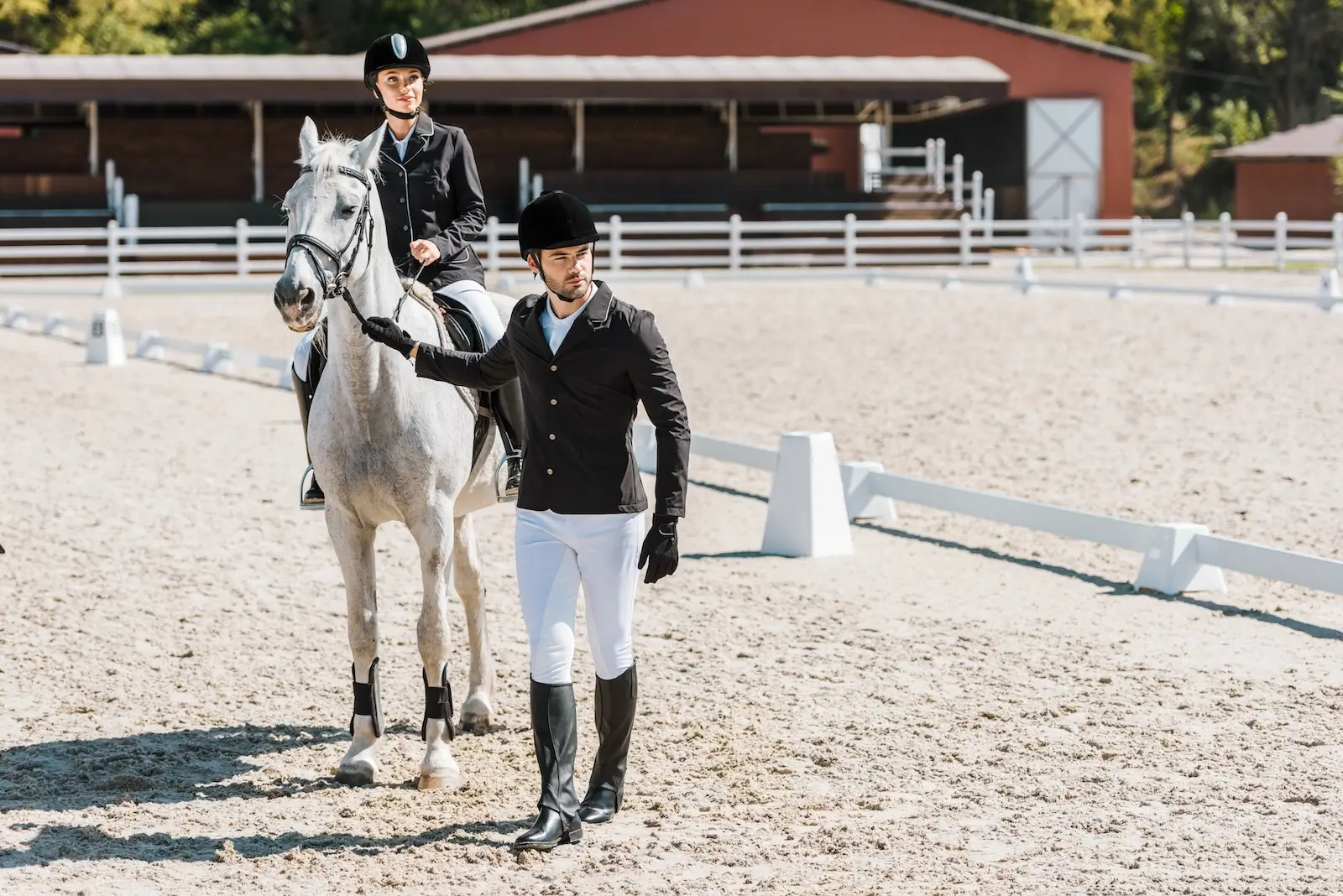
Choosing between HDPE and PVC is only part of the decision. The quality of the fencing system, the way it’s installed, and how well it matches your arena’s day-to-day demands all play a major role in how it looks and performs over time.
If you want fencing that stays straight, stays visible, and keeps your arena looking polished season after season, here are the details worth paying attention to before you commit.
1. Straight Lines & Consistent Rail Height
Dressage is all about precision, and the fence line should reflect that same level of polish. Straight rails and consistent height improve visibility for riders, create clean boundaries for training, and help the entire arena look more professional.
When you’re evaluating fencing, look closely at how the rails connect and how well the system holds its line over long distances. Even small dips or uneven corners can become more noticeable over time, particularly after seasonal ground changes or heavy use.
2. Outdoor-Rated UV Protection
Sun exposure is one of the biggest reasons white fencing changes over time. Without proper UV protection, materials can fade, dull, or develop a chalky surface that makes the fence look older and harder to clean. Ask whether the material is built specifically for continuous outdoor exposure and whether it includes UV inhibitors.
Also take a close look at the warranty. A strong warranty often signals a product designed to hold its appearance for the long run.
3. Strong Posts & Correct Post Spacing
Posts do most of the structural work. They keep the rails aligned, maintain straight lines, and help the fence stay stable through wind, soil movement, and daily use. A strong fence system starts with proper post spacing and posts that match the conditions on your property. Soil type, drainage, wind exposure, and the size of the arena all influence what “strong enough” really means.
If the post line is weak or inconsistently set, even premium rails can look uneven.
4. Clean, Durable Fasteners & Joints
The way rails connect matters just as much as the rail material itself. Over time, joints can loosen, fasteners can corrode, and connection points can become stress zones, especially near corners and gates.
A well-designed joint system helps the fence keep its straight lines and prevents small alignment issues from getting worse year after year. Look for hardware designed to stand up to outdoor use, with connections that stay tight and clean.
5. Reinforced Gates & High-Traffic Areas
Gate openings are where fences take the most daily wear. They handle constant swinging, latching, and equipment traffic, and they often take bumps from horses or machinery.
Planning gate areas correctly from the beginning prevents costly adjustments later. Reinforced gate posts and high-quality latches make a noticeable difference in long-term performance. Wide gate openings are also important if you’ll be bringing in an arena drag, tractor, or mower.
6. Visibility & Horse-Friendly Design
Dressage fencing should be highly visible, smooth, and predictable. Clear rails help horses and riders recognize boundaries, while smooth surfaces reduce the risk of cuts or scrapes if contact happens.
Pay attention to rail spacing and overall design. You want a layout that reads clearly from the saddle and looks clean from a distance without creating unnecessary trip points or sharp edges around corners, gates, or connection points.
7. The Right Fit for Your Climate
Climate is one of the most overlooked decision factors, and it can dramatically affect how fencing ages.
Strong sun, high humidity, heavy snow, freeze/thaw cycles, and constant wind all stress materials in different ways, so think about what your arena faces throughout the year and choose a material that matches those conditions. A fence that performs well in your region saves you time, keeps your arena looking better longer, and reduces repair and replacement costs over the years.
Which Fencing Material Is Best for a Dressage Arena?
Choosing fencing for a dressage arena is partly about appearance, but more than anything, it’s about how the material performs once the arena becomes part of daily life. The right fence should hold its line, stay visible, and handle the wear that comes with horses, equipment, and changing seasons.
Both HDPE and PVC can be good options depending on your goals, your climate, and how heavily your arena is used. But if you’re looking for the best overall mix of durability, low maintenance, and long-term value, HDPE is usually the material that wins out for dressage arenas.
When to Choose HDPE
HDPE is the better fit for most owners who want a fence that holds up to real-world facility use and keeps its appearance with less effort. It’s especially popular for outdoor arenas and training environments where the rails are exposed to regular impact, equipment traffic, and the kind of seasonal stress that can shorten the life of more rigid materials.
Choose HDPE dressage arena fencing if:
- You want a fence that flexes on impact instead of cracking or splitting.
- Your arena is outdoors and exposed to sun, moisture, and seasonal temperature swings.
- You’re in a cold climate where brittleness and cracking are a concern.
- Your facility has frequent equipment traffic, gates in daily use, or high activity levels.
- You want a consistent, polished look that holds up longer with less deep cleaning.
- You’re willing to pay more upfront for a lower lifetime cost and fewer repairs or replacements.
For most dressage arenas—especially those built to last—HDPE checks the most boxes. It’s the material that tends to stay straighter, stay cleaner-looking, and hold up better through years of training, weather, and everyday facility life.
When to Choose PVC
PVC can be a practical choice when appearance and low upkeep are important, the arena is in a mild climate, and the risk of repeated impact is lower. Many owners also consider PVC when they’re working within a tighter upfront budget and want a clean, professional fence line without the maintenance demands of wood.
Choose PVC dressage arena fencing if:
- You’re in a mild climate.
- The arena has lower impact risk.
- The budget is tight and you want a lower upfront price.
PVC can still look great and perform well in the right setting. The key is choosing a quality product and matching it to realistic expectations for climate and use. However, for most dressage arenas, HDPE offers the strongest combination of durability, appearance, and long-term value.
HDPE vs. PVC Dressage Arena Fencing FAQs
Is PVC or HDPE Stronger?
In most dressage arena applications, HDPE is considered stronger in practical terms because it combines strength with flexibility. HDPE tends to absorb impact and rebound, which helps it handle bumps from horses, gates, and equipment without cracking as easily. PVC can be strong and rigid, but that rigidity can make it more prone to cracking or splitting under repeated impact, especially in colder temperatures.
What Are the Benefits of an HDPE Dressage Arena Fence?
HDPE fencing is known for durability, impact resistance, and long-term value. It typically performs well in harsh weather, holds its appearance longer in outdoor conditions, and stays low maintenance compared to wood. For dressage arenas, HDPE is a popular choice because it tends to stay straight, stay bright, and handle daily facility wear with fewer repairs.
What Are the Disadvantages of HDPE Dressage Arena Fencing?
The biggest drawback is upfront cost. HDPE fencing often costs more than PVC initially, which can matter if you’re building an arena on a tight budget. Depending on the style and manufacturer, some owners may also find there are fewer decorative options compared to certain PVC fence profiles. Still, many buyers consider the longer lifespan and reduced repairs worth the higher initial investment.
What Are the Benefits of a PVC Dressage Arena Fence?
PVC fencing offers a clean, professional appearance with minimal upkeep compared to wood. It’s easy to wash, doesn’t require painting or staining, and often comes at a lower upfront cost than HDPE. For dressage arenas in mild climates and lower-impact settings, PVC can be a practical way to get that crisp, visible arena boundary.
What Are the Disadvantages of PVC Dressage Arena Fencing?
PVC can become more brittle over time, especially in cold climates, which may increase the chance of cracking at joints or stress points. Some products may also yellow, chalk, or dull with sun exposure, which can make the fence look older and require more frequent deep cleaning to keep it bright.
Which Material Is Best for Outdoor Dressage Arenas?
For most outdoor dressage arenas, HDPE is usually the better choice. Outdoor conditions involve sun exposure, moisture, temperature swings, and more opportunity for impact from equipment. HDPE generally handles those demands better and maintains a consistent appearance longer.
Which Dressage Arena Fencing Material Lasts Longer, HDPE or PVC?
In many installations, HDPE tends to last longer because it resists cracking and impact damage better and performs well through changing weather conditions. PVC can last a long time too, but lifespan often depends heavily on climate, product quality, and how much impact the fence takes.
Does PVC Dressage Arena Fencing Yellow Over Time?
It can. Some PVC products may discolor, chalk, or yellow with prolonged UV exposure, particularly in high-sun regions. Higher-quality PVC formulations may reduce this issue, but if long-term brightness is a top priority, HDPE often holds up better.
Does HDPE Dressage Arena Fencing Fade in the Sun?
Quality HDPE fencing is typically manufactured with UV inhibitors, which helps it maintain its appearance over time. Like any outdoor material, some change may occur after many years, but HDPE usually resists visible fading and chalking better than many lower-grade alternatives.
Which Option Is More Cost-Effective Over Time?
While PVC often has a lower upfront price, HDPE is frequently more cost-effective over the long run because it tends to require fewer repairs, resists cracking better, and typically lasts longer in demanding conditions. If you plan to keep your arena for many years, total cost of ownership often favors HDPE.
Find the Best Dressage Arena Fencing Options at Derby Fence
HDPE and PVC dressage fencing can both deliver a clean, professional look, but the difference shows up over time. If you want fencing that handles impact better, performs well through changing seasons, keeps its appearance longer, and delivers stronger value over the life of your arena, HDPE is often the best overall material for dressage arena rails.
Ready to choose the right fence for your dressage arena ? Contact Derby Fence today for a free quote and personalized fencing consultation. Our team is here to help you create a safe, beautiful, and competition-ready environment with the highest-quality HDPE horse and equine rail fencing on the market.
Let us help you build a safer, smarter dressage arena for your horses today.