


Choosing the right fencing material can make all the difference in protecting your property, animals, and equipment. With options like HDPE, PVC, and vinyl available, it’s important to understand how each performs in terms of durability, safety, and long-term value. In this guide, we’ll break down the differences between these popular fencing materials and show you why HDPE fencing stands out as the superior choice for strength, flexibility, and reliability.
Understanding HDPE, PVC, & Vinyl Fences
When comparing fencing materials, HDPE, PVC, and vinyl often come up as the most popular options for modern properties. While they may look similar at first glance, their performance, durability, and maintenance needs vary widely. Understanding the key characteristics of each helps you choose a fence that best fits your property’s requirements for strength, safety, and longevity.
HDPE Fencing
HDPE (High-Density Polyethylene) fencing is known for its exceptional strength, flexibility, and resistance to cracking or splintering. Made from 100% HDPE, this fencing material can withstand extreme weather, impact, and temperature changes without losing its integrity. It’s ideal for equestrian, agricultural, and residential use—offering long-lasting protection with minimal maintenance.
PVC Fencing
PVC fencing, or Polyvinyl Chloride fencing, is a common choice for homeowners looking for a clean, uniform appearance. While PVC provides good weather resistance and is generally affordable, it’s more rigid than HDPE and can become brittle over time—especially in colder climates. It works well for decorative applications or light-duty enclosures but may require more frequent repairs in high-impact environments.
Vinyl Fencing
Vinyl fencing shares similarities with PVC but often includes additional ingredients to improve its durability and UV resistance. It’s valued for its smooth finish and low maintenance requirements, making it a popular choice for residential properties. However, vinyl can warp, fade, or crack under prolonged exposure to harsh sun or fluctuating temperatures, limiting its lifespan compared to other more durable fencing materials.
HDPE vs PVC vs Vinyl Fence Materials
Durability
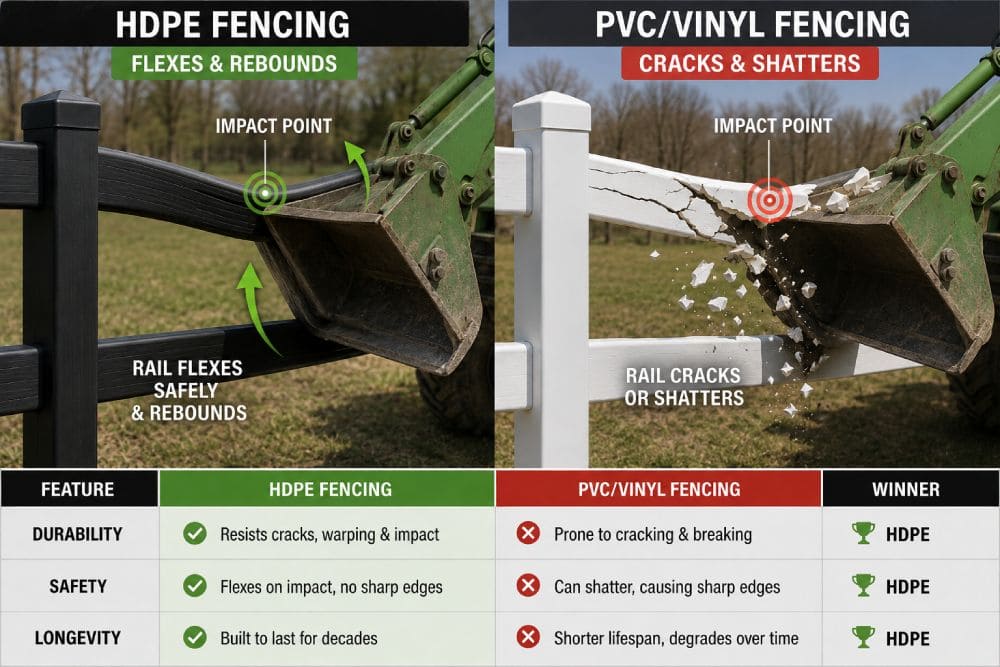
When it comes to strength and long-term reliability, HDPE fencing easily outperforms PVC and vinyl. Its high-density composition allows it to withstand constant use, harsh climates, and physical impact without cracking or weakening. Unlike PVC and vinyl, which tend to warp, chip, or fade after years of exposure, HDPE maintains its structural integrity and appearance. This makes it the preferred choice for demanding environments where durability is non-negotiable.
Key advantages include:
- Resists cracking, warping, and splintering under pressure
- Maintains shape and stability in all climates
- Offers a longer service life than PVC or vinyl fencing
Safety
Safety is a critical factor in fencing—especially when protecting horses, livestock, and people. HDPE fences are designed with smooth, rounded surfaces that minimize the risk of cuts, splinters, or sharp edges. The material’s flexibility allows it to absorb impact without breaking, making it far safer than PVC or vinyl, which can shatter when struck. HDPE is also non-toxic and free of harmful chemicals, ensuring a secure environment for animals and people alike.
Key advantages include:
- Smooth, rounded edges prevent injury
- Flexible structure absorbs impact without breaking
- Non-toxic and chemical-free for animal and human safety
Weather Resistance
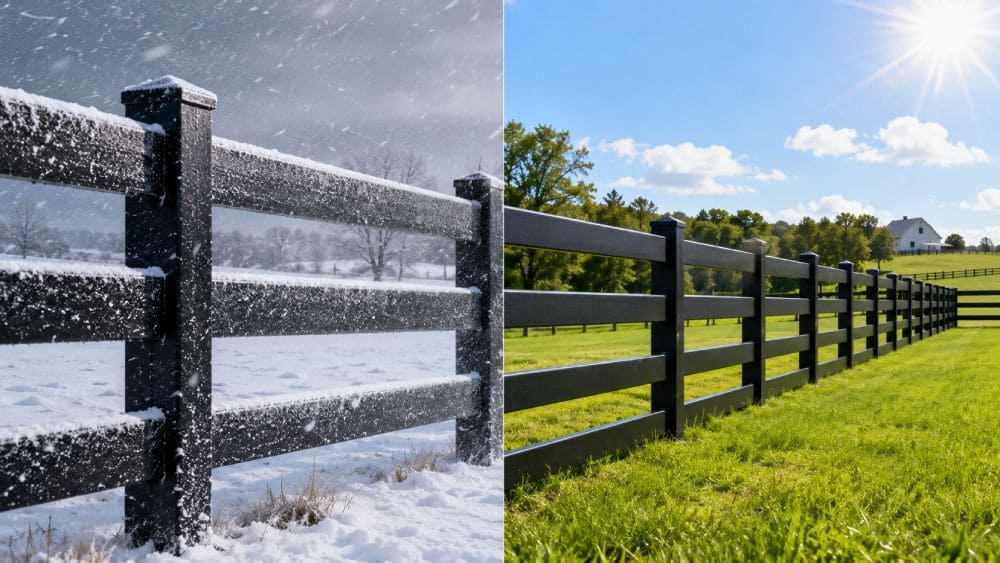
HDPE fencing maintains its strength and color in all weather conditions, from intense UV exposure to freezing temperatures. Unlike PVC and vinyl, which can become brittle, yellow, or warp with seasonal changes, HDPE remains stable and resilient. Its UV-resistant and moisture-resistant properties prevent fading, mold, and deterioration, ensuring the fence looks and performs like new for years.
Key advantages include:
- UV-stabilized to prevent fading or discoloration
- Impervious to moisture, mold, and mildew
- Performs consistently across all temperature extremes
Impact Resistance
HDPE’s flexibility and tensile strength give it unmatched impact resistance, making it ideal for environments where collisions are common—like pastures, paddocks, and training arenas. Unlike PVC or vinyl, which can snap or shatter upon contact, HDPE flexes and rebounds, absorbing energy safely. This durability helps protect both the fence and the animals interacting with it.
Key advantages include:
- Absorbs and disperses force on impact
- Prevents cracking or breakage from kicks or collisions
- Ideal for all equestrian and agricultural fencing applications
Noise Reduction
Thanks to its dense structure and solid panel design, HDPE fencing provides excellent noise reduction compared to PVC and vinyl. It effectively dampens external sounds such as wind, machinery, or traffic—creating a quieter, calmer environment. This feature is particularly valuable for horse farms, training arenas, and commercial spaces looking to minimize disturbances.
Key advantages include:
- Dense composition blocks and absorbs noise
- Reduces echo and environmental sounds
- Creates a more peaceful, private space
Privacy
While rail fencing isn’t designed for full seclusion, HDPE provides better visual consistency and coverage than PVC or vinyl. Its sturdy rails maintain their shape and alignment, preventing the sagging, warping, or widening gaps that often develop in other materials. This creates a cleaner, more uniform barrier that helps define property lines, separate pastures, and enhance the overall look of your space. HDPE’s solid, color-stable rails maintain their appearance over time, offering reliable containment with a polished, cohesive finish.
Key advantages include:
- Rails stay straight and aligned for consistent visual coverage
- Resists warping or gapping that can occur with PVC or vinyl
- Creates a clean, uniform boundary without sacrificing openness
Aesthetics
HDPE fencing combines durability with a modern, clean appearance that lasts. Unlike vinyl and PVC, which can fade, yellow, or become streaked with age, HDPE retains its rich color and smooth finish. Its uniform, polished look complements a variety of architectural styles, from rustic farm settings to modern arenas. With minimal maintenance, HDPE fencing provides long-lasting visual appeal without the need for painting, staining, or frequent repairs.
Key advantages include:
- Retains color and finish without fading
- Smooth, uniform surface enhances property aesthetics
- Long-lasting beauty with minimal maintenance
Customization
HDPE fencing is highly customizable, offering flexibility that vinyl and PVC cannot match. Property owners can select from various colors, rail styles, and configurations to meet both functional and aesthetic needs. Its adaptability allows HDPE to suit unique terrains, slopes, or layouts, while maintaining structural integrity. This makes it ideal for farms, ranches, equestrian facilities, commercial spaces, and arenas seeking tailored solutions.
Key advantages include:
- Wide range of colors, styles, configurations
- Easily adapted to different terrains and layouts
- Combines functionality with personalized design
Environmental Impact
HDPE fencing is an environmentally responsible choice compared to vinyl and PVC. It is fully recyclable and free of toxic additives, minimizing harmful environmental effects during production and disposal. Additionally, HDPE’s long lifespan reduces waste from replacements, unlike PVC and vinyl, which degrade faster and require frequent disposal. Choosing HDPE supports sustainable property management while maintaining high performance and safety.
Key advantages include:
- 100% recyclable and eco-friendly
- Free of harmful chemicals and additives
- Long-lasting durability reduces replacement waste
Installation
Installing HDPE fencing is straightforward due to its lightweight yet durable design. Vinyl and PVC can be more brittle, requiring careful handling to prevent cracks or damage. HDPE’s flexibility allows for easier alignment and handling during installation, reducing labor time and minimizing errors. Whether installed professionally or as a DIY project, HDPE provides a fast, efficient, and secure setup.
Key advantages include:
- Lightweight, flexible panels simplify installation
- Reduces risk of cracking or damage during setup
- Minimizes labor time and effort compared to vinyl or PVC
Maintenance
HDPE fencing requires minimal maintenance, outperforming vinyl and PVC in longevity and upkeep. Its non-porous surface resists mold, mildew, rot, and corrosion, eliminating the need for staining, painting, or sealing. Vinyl and PVC may require frequent cleaning and touch-ups, especially in harsh climates, whereas HDPE stays clean and visually appealing with just occasional rinsing. This makes it an ideal choice for busy property owners seeking low-effort durability.
Key advantages include:
- Resists mold, mildew, and rot naturally
- Requires only occasional cleaning to maintain appearance
- No painting, staining, or sealing necessary
Longevity
HDPE fencing offers a lifespan far exceeding that of vinyl and PVC. Vinyl and PVC often degrade within a decade due to UV exposure, temperature fluctuations, and physical wear. HDPE maintains its strength, color, and structural integrity for decades with minimal upkeep. This extended lifespan provides exceptional value for property owners, reducing replacement costs and providing reliable performance over time.
Key advantages include:
- Lasts decades without significant degradation
- Maintains structural integrity in all conditions
- Outperforms vinyl and PVC in long-term durability
Cost
While the upfront cost of HDPE fencing may be slightly higher than vinyl or PVC, its low maintenance and long lifespan make it a cost-effective investment. Vinyl and PVC often require repairs, cleaning, or replacements within a few years, increasing overall lifetime expenses. HDPE provides superior durability, safety, and aesthetic appeal while minimizing ongoing costs, offering unmatched long-term value.
Key advantages include:
- Lower lifetime cost due to durability and low maintenance
- Minimal repairs or replacements needed
- Greater long-term value compared to vinyl or PVC
HDPE vs PVC vs Vinyl Fencing: FAQ
What Is the Main Difference between HDPE, PVC, and Vinyl Fencing?
The biggest difference lies in durability and flexibility. HDPE is impact-resistant, flexible, and designed for long-term performance in harsh conditions. PVC and vinyl are more rigid and can crack, warp, or become brittle over time, especially in extreme temperatures.
Which Type of Fence Is the Most Durable?
HDPE is the most durable option. Its high-density composition resists cracking, warping, and impact damage, even in harsh climates. PVC and vinyl tend to become brittle or warp over time, especially under temperature stress.
Which Type of Fence is Safest for Horses and Livestock?
HDPE is the safest choice. It flexes under pressure, won’t splinter or shatter, and features smooth, rounded edges that reduce injury risks. PVC and vinyl can break into sharp pieces when struck, posing hazards to animals.
Which Fence Material Handles Extreme Weather the Best?
HDPE outperforms both vinyl and PVC in heat, cold, moisture, and UV exposure. It does not warp or become brittle, while vinyl and PVC often fade, yellow, or deform with temperature changes.
Which Type of Fence Requires the Least Maintenance?
HDPE requires the least maintenance. It resists mold, mildew, and fading without the need for painting or sealing. Vinyl and PVC may need more frequent cleaning and occasional repairs as they age.
Which Fencing Material Lasts the Longest?
HDPE provides the longest lifespan. It maintains its structural integrity and color for decades. Vinyl and PVC tend to degrade faster due to environmental exposure.
Which Type of Fence Is Best for High-Impact Environments?
HDPE is ideal for areas where kicks, bumps, or animal pressure are common. Its flexibility and tensile strength prevent breakage, unlike PVC and vinyl, which can crack or snap under impact.
Which Fencing Material Offers the Best Long-Term Value?
HDPE offers superior long-term value due to its longevity, safety, and extremely low maintenance needs. Vinyl and PVC may cost less upfront but often require repairs or replacements sooner.
Which Type of Fence Is Most Eco-Friendly?
HDPE is the most environmentally friendly option. It is fully recyclable and free of harmful additives. PVC and vinyl contain chlorine-based materials and degrade faster, creating more waste.
Which Fence Is Easiest to Install—HDPE, PVC, or Vinyl?
HDPE is typically the easiest to install thanks to its lightweight, flexible design. PVC and vinyl must be handled more carefully to avoid cracking or damaging the panels.
Get Durable, High-Quality HDPE Fencing from Derby Fence
When you’re choosing a fence that needs to protect your animals, stand up to daily use, and hold its appearance for years, HDPE clearly rises above PVC and vinyl. Its unmatched strength, flexibility, and long-term reliability make it the trusted choice for farms, equestrian facilities, and properties where safety and durability matter most. With HDPE, you get a fence built to perform—not just when it’s new, but throughout its entire lifespan.
Ready to invest in fencing that delivers superior protection and long-lasting value? Contact Derby Fence today for a free quote and see why property owners nationwide rely on HDPE fencing products for dependable, worry-free performance.