

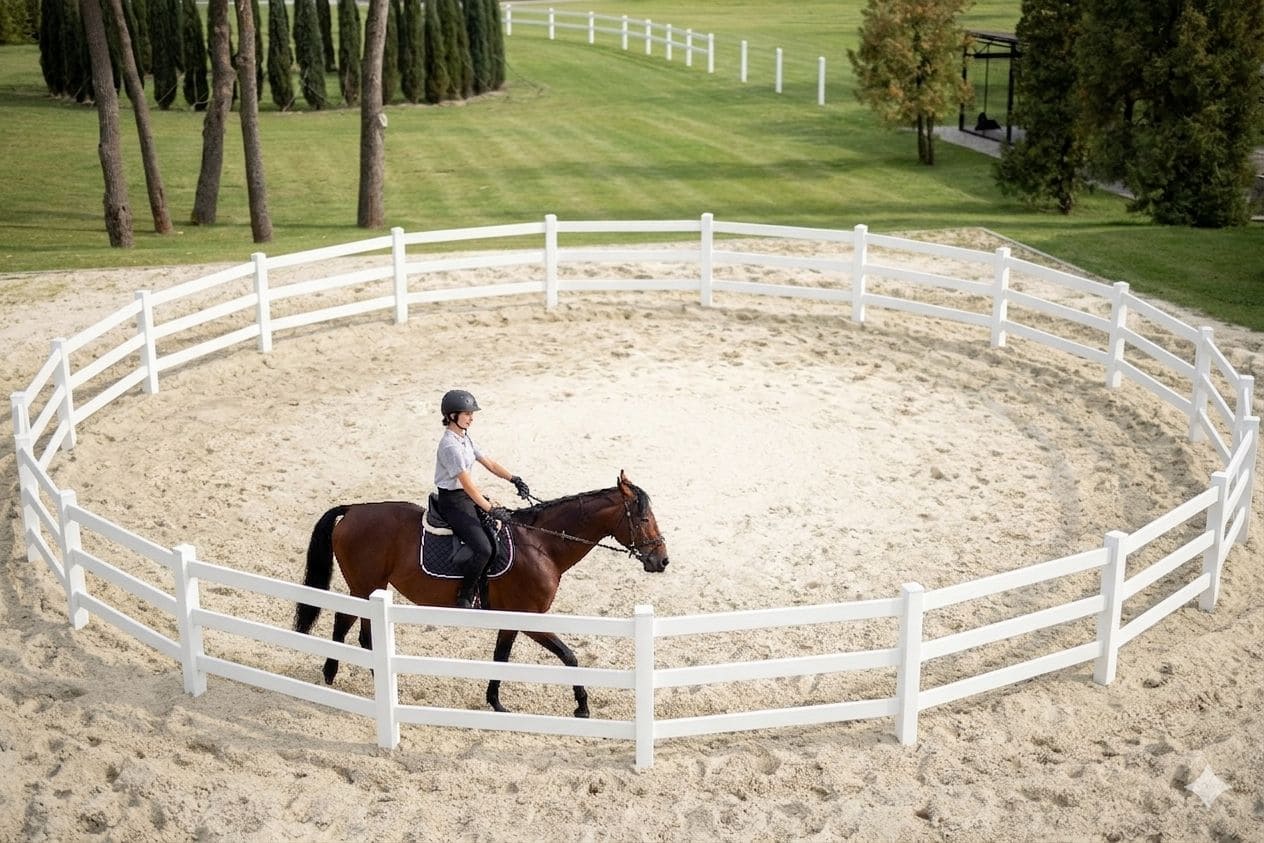
A round pen is one of the most practical investments you can make if you work with horses, cattle, or other livestock. It gives you control, improves safety, and creates a focused environment where animals can be trained, handled, or exercised without unnecessary stress.
But building a round pen is a little more complicated than a traditional rectangular fence. The process requires choosing the right design, size, and materials so it performs consistently over time.
In this guide, we explain everything you need to know about round pens, from how much they cost and design ideas to building one step by step. If you’re planning to build once and use for years, this article will help you do it right.
What Are Round Pens?
A round pen is a circular enclosed space used to train, handle, and manage livestock. While commonly associated with horses, round pens are also widely used for cattle and other animals where controlled movement and safe handling are critical.
Unlike square or rectangular pens, a round pen has no corners. This design prevents animals from getting “stuck” or using corners to resist pressure. Instead, they continue moving naturally along the perimeter, which makes handling and training more predictable.
Round pens are used in a variety of settings, including ranches, training facilities, and small farms. Whether you’re starting young horses, working cattle, or simply creating a controlled space for exercise, the round design gives you a clear advantage.
Types of Round Pens
Not all round pens are built the same. The structure you choose affects how the pen performs under pressure, how easy it is to maintain, and how long it will last. Most decisions come down to two things: how permanent the setup needs to be and what material you build it with.
Permanent Round Pens
Permanent round pens are built with installed posts and fixed rails. These are designed for long-term use and are typically anchored directly into the ground. They offer greater stability and durability, making them a strong choice for operations that rely on daily use. However, once installed, they are not easily moved or reconfigured.
Portable Round Pens
Portable round pens use pre-built panels that can be assembled and disassembled as needed. They’re useful for temporary setups, events, or operations that require flexibility. The trade-off is reduced stability compared to permanent structures, especially in high-use or high-pressure situations.
Material-Based Types
The overall shape of a round pen is important, but the material you choose has a direct impact on durability, safety, maintenance, and long-term cost.
Material | Description | Pros | Cons |
Wood | Traditional fencing using boards or rails | Natural appearance; widely available | Requires regular maintenance; prone to rot, splintering, and weather damage |
Metal | Steel or aluminum panels or rails | Strong and durable; commonly used in livestock settings | Can rust over time; may become hot in sunlight; potential safety concerns depending on design |
PVC/vinyl | Lightweight plastic-based fencing | Low maintenance; clean appearance | Less durable under pressure; not ideal for heavier livestock or long-term use |
HDPE | High-density polyethylene engineered for durability | Resistant to rot, rust, and UV damage; low maintenance; safer surface for animals | Higher upfront cost compared to some materials |
Material affects how long the structure lasts, how much maintenance it requires, and how safe it is for your animals. A poorly chosen material can lead to higher long-term costs, even if the upfront price looks attractive.
Choosing the right material from the start is what separates a pen that lasts a few years from one that performs consistently for decades.
Key Features & Uses of Round Pens
A well-built round pen becomes a controlled environment where you can influence movement, behavior, and outcomes with far less resistance. When designed correctly, it improves safety, speeds up training, and makes everyday handling more predictable across different types of livestock.
Training & Handling Applications
Round pens are widely used for starting young horses, especially during early groundwork when responsiveness and trust are being developed. The circular layout keeps the animal moving without distraction, making it easier to establish cues and reinforce behavior.
For cattle and other livestock, round pens are equally effective for sorting, directing movement, and handling animals in a controlled space. Instead of chasing or forcing movement, handlers can guide livestock more naturally, reducing stress and resistance.
This controlled setup allows for consistent repetition, which is critical when building habits or correcting behavior.
Safety & Control
One of the biggest advantages of a round pen is the level of control it gives the handler. Without corners, animals are less likely to stop abruptly, turn aggressively, or feel trapped, creating a safer working environment for both the animal and the handler. It also reduces the chances of injury caused by sudden movements, collisions, or attempts to escape.
Fence design plays a role here. Proper height, spacing, and material selection all contribute to how safely the pen performs under pressure.
Efficiency in Operations
Time matters in any livestock operation. A round pen helps reduce the time it takes to complete training sessions, move animals, or carry out routine handling tasks.
Because the space limits distractions and keeps animals moving in a consistent pattern, handlers can achieve results faster with less effort, which becomes especially valuable when working with multiple animals or managing a busy schedule. Over time, this efficiency adds up, improving overall workflow and reducing physical strain.
Additional Uses
Beyond training and handling, round pens can serve multiple roles depending on your operation.
They can function as exercise areas for horses, temporary holding spaces for cattle, or staging areas during sorting and transport. Some operations also use round pens as part of a larger system, integrating them with alleys, chutes, or larger enclosures.
This flexibility makes a round pen a practical addition—not just for training but also for everyday livestock management.
Round Pen Size & Dimensions
Round pens are typically measured by diameter. Common sizes include 40, 50, 60, and 80 feet. Smaller pens around 40 to 50 feet are often used for intensive training or groundwork, where tighter control is needed. Larger pens, such as 60 to 80 feet, allow for more natural movement and are better suited for multiple uses or larger livestock.
Additionally, rail spacing should prevent animals from getting stuck or attempting to push through, while still maintaining visibility.
Fence height is another important consideration. Horses generally require heights between 4 and 5 feet, while cattle and other livestock may require different configurations depending on their size and behavior.
How Much Does a Round Pen Cost? 4 Factors to Consider
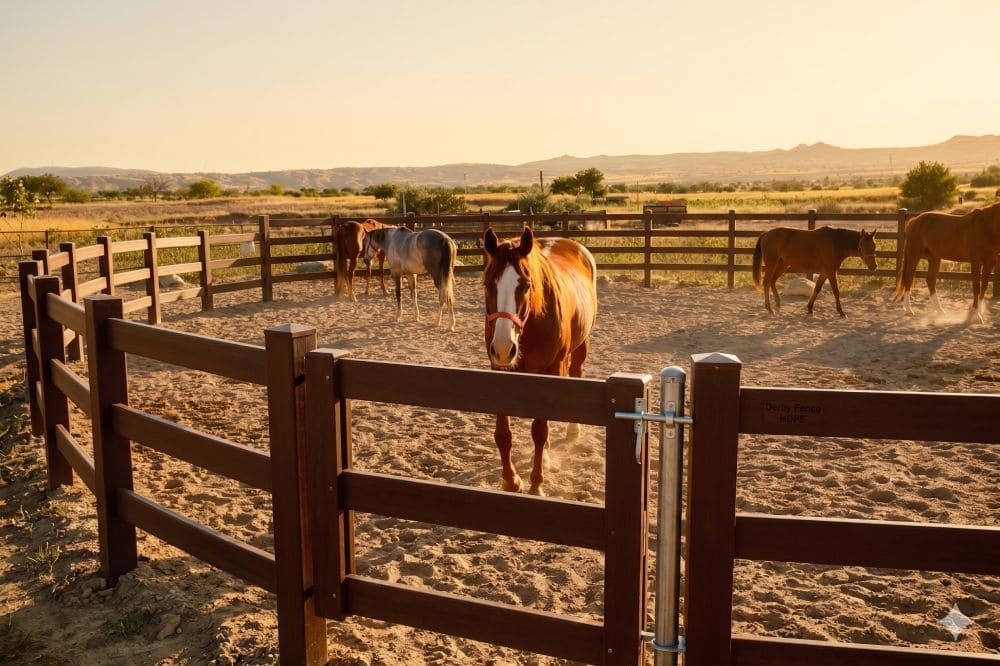
The cost of building a round pen goes beyond the initial price of materials. What looks affordable upfront can turn into a higher long-term investment if maintenance, repairs, or replacements are required.
1. Material Costs
Costs vary depending on the material you choose. Wood and PVC typically have lower upfront costs, making them attractive for budget-conscious builds. Metal and HDPE tend to cost more initially, but they are built for durability and consistent performance.
The key is looking beyond the price per foot and considering how the material will hold up under daily use, weather exposure, and pressure from livestock.
2. Installation Costs
Building a round pen yourself can reduce labor costs, but it requires time, tools, and attention to detail. Mistakes during installation, such as uneven spacing or poor alignment, can affect the structure’s performance. Professional installation adds to the upfront cost but may result in a more precise and stable build, especially for permanent setups.
3. Land Preparation
Preparing the site is often overlooked, but it plays a major role in how well the pen performs. The preparation process includes leveling the ground, improving drainage, and adding proper footing. Skipping or minimizing this step can lead to water buildup, uneven surfaces, and faster wear, which can increase costs later.
4. Long-Term Costs
Long-term costs are where the biggest differences between materials show up. Factoring in maintenance, repairs, and lifespan gives you a clearer picture of the true cost of your round pen.
For example, wood may require regular sealing or replacement, while metal may need maintenance to prevent rust. Alternatively, lower-maintenance materials like HDPE reduce the time and money spent on upkeep over the years.
How to Build a Round Pen: Step-by-Step Process
Building a round pen requires planning, accurate layout, and the right materials. A rushed build usually shows up later as drainage issues, weak spots, or more maintenance than expected. Taking the time to do each step correctly helps create a pen that is safer, stronger, and easier to use for years to come.
Step 1: Choose the Right Location
Start by selecting a site that is relatively level, well-drained, and easy to access with equipment, animals, and vehicles. Avoid low areas where water tends to collect after rain, since standing water can quickly create mud, footing problems, and long-term damage.
Look at how the space connects to the rest of your property. A good location makes it easier to move animals in and out, bring in materials, and connect the pen to nearby barns, pastures, or working areas.
If the site is not naturally level, plan for grading before installation begins. Fixing the ground first is much easier than trying to correct drainage problems after the pen is built.
Step 2: Select Size & Layout
Choose your round pen diameter based on the type of livestock you are working with and how you plan to use the space. Smaller pens are useful for close control and early training, while larger pens allow for more natural movement and broader handling applications.
Think through the layout before you build. Decide where the gate should go, how animals will enter and exit, and whether the pen should connect to other parts of your setup.
Once you settle on a size, walk the area and visualize how the finished pen will function. This step can help you catch spacing, access, or workflow problems before installation starts.
Step 3: Mark the Circle
Drive a stake into the center point of the pen and attach a measuring line equal to the radius (half) of your intended diameter. Walk the line in a full circle and mark the perimeter with paint, flags, or stakes.
Take your time with this step. An accurate circle improves the appearance of the finished pen and makes post or panel installation much easier. It’s a good idea to double-check your measurements from multiple points before moving on, as small layout errors at this stage can create alignment problems later.
Step 4: Install Posts or Panels
If you’re building a permanent round pen, set your posts at consistent intervals around the marked circle. Make sure they are aligned, properly spaced, and installed deep enough to provide long-term stability.
If you’re using portable panels, position them evenly and confirm that all connections are secure. The goal is to create a consistent wall with no weak points or awkward gaps.
Use a level and measuring tape throughout the process instead of relying on visual estimates. Precision here has a direct effect on how strong and professional the final build looks.
Step 5: Install Rails or Fencing Material
Attach rails or fencing material at consistent heights based on the type of animals the pen will hold. The spacing between rails should be close enough to discourage animals from pushing through while still maintaining visibility and airflow.
Pay close attention to fastening and alignment. Loose rails, uneven lines, or poorly secured sections create safety risks and shorten the life of the pen.
Step 6: Add Gate Access
Install the gate in a location that supports smooth movement in and out of the pen. It should be easy to operate, wide enough for your intended use, and positioned so it does not interfere with handling or training.
Think practically about how you will use the gate day to day. If animals will be entering from a pasture, trailer, or alley, place the gate where movement feels natural and controlled. Check that the gate swings or opens properly, latches securely, and does not leave gaps that could create escape points.
Step 7: Prepare the Footing
Footing has a major effect on both usability and safety. This step helps prevent erosion, puddling, and uneven wear.
Start by addressing drainage, then add footing materials suited to your climate and intended use. Common options include sand, gravel bases, or specialized footing blends.
The goal is to create a surface that provides traction, drains well, and holds up under repeated use. Footing that is too hard, too deep, or poorly drained can make the pen uncomfortable and harder to manage. If needed, add base layers or drainage solutions before the final footing goes down.
Step 8: Final Inspection
Before putting the round pen into regular use, inspect the entire structure carefully. Check for loose connections, uneven heights, weak spots, sharp edges, and gate issues. Walk the full perimeter and test the stability of posts, rails, or panels. Look at the footing again to make sure it is even and ready for use.
A final inspection gives you the chance to correct small issues before they become larger safety or maintenance problems. It’s the last step, but it protects all the work that came before it.
Round Pen Design Ideas & Upgrades
Once the core structure is in place, small design upgrades can significantly improve how your round pen performs day to day. These enhancements can increase usability, extend lifespan, and make the space more versatile for different types of livestock work:
- Covered or partially covered pens: Adding a roof or shade structure helps protect both animals and handlers from harsh weather, allowing for more consistent use year-round.
- Lighting for extended use: Installing lighting makes early morning or evening work possible, which is especially useful during busy seasons.
- Specialized footing systems: Layered footing or drainage-friendly materials help maintain a consistent surface, reducing mud, dust, and long-term wear.
- Integrated viewing or training areas: Seating or observation space can be useful in training environments where monitoring progress is important.
- Multi-use layouts: Designing the pen to connect with alleys, chutes, or larger enclosures can improve workflow and make handling more efficient.
These upgrades are not always required, but they can add long-term value and improve how the space functions within your overall operation. Thinking through these options early can help you build a round pen that works harder for you over time.
Why Choose HDPE Fencing for Your Round Pen?
HDPE fencing is designed to handle long-term exposure to weather, moisture, and UV conditions without breaking down the way traditional materials can. Unlike wood, it does not rot, splinter, or require regular sealing. Compared to metal, it will not rust or become dangerously hot in direct sunlight. The smooth surface reduces the risk of injury for both horses and livestock, making it a safer option in high-contact environments. HDPE also requires minimal maintenance, which means less time spent on repairs and more time focused on your operation.
While the upfront cost may be higher than some alternatives, the long lifespan and reduced maintenance make it a more practical investment over time.
Round Pen FAQs
What Is the Best Size for a Round Pen?
The best size for a round pen depends on your use. Smaller pens offer more control for training, while larger pens allow for more natural movement.
How Much Does It Cost to Build a Round Pen?
Round pen cost varies based on size, materials, and site preparation. Your budget should include both upfront and long-term expenses.
What Is the Best Material for a Round Pen?
The best material for a round pen balances durability, safety, and maintenance. Long-term performance is often more important than initial cost. A popular option is HDPE fencing, which is low maintenance, long-lasting, durable, and aesthetically pleasing.
Can I Build a Round Pen Myself?
Yes, many round pens can be built as DIY projects, provided you have the right tools and follow proper installation steps.
How Long Does a Round Pen Last?
The lifespan of a round pen depends heavily on the material and maintenance. Some materials require frequent upkeep, while others are designed for long-term use.
Build High-Quality Round Pens with HDPE Fencing from Derby Fence
Building a round pen is an investment in safety, efficiency, and long-term usability. The right design, size, and materials all play a role in how well it performs over time.
Choosing materials that are built to last can make a significant difference in both performance and maintenance. If you’re planning to build a round pen that holds up over time, exploring durable, HDPE fencing is a practical place to start.
Ready to build a round pen for your property? Contact Derby Fence today for a free quote and personalized fencing consultation. Our team is here to help you create a safe, beautiful, and efficient pen with the highest-quality HDPE round pen fencing on the market.